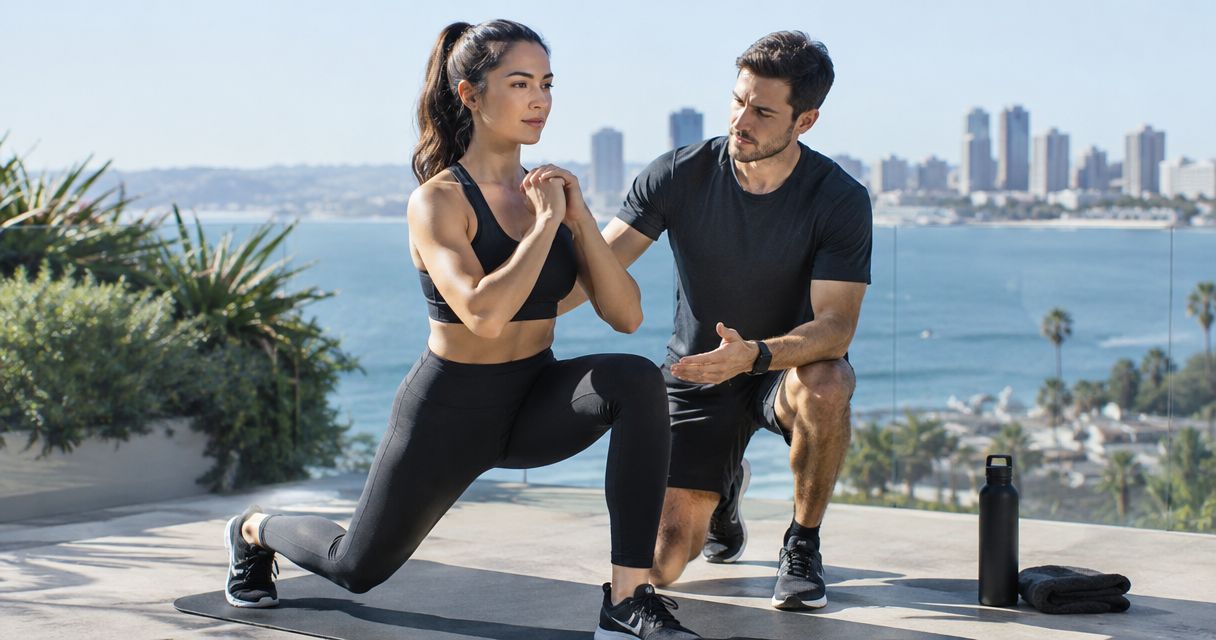
Best overall fit for busy professionals aged 30+: diagnostic-led, one-on-one training. Best for avoiding a training commute: in-home coaching. Best for location flexibility: live virtual coaching. If you are searching for the best personal trainer for weight loss near me in San Diego, Omnifittraining offers these formats alongside corrective exercise and nutrition coaching. This 2026 guide ranks the formats by practical fit, not by unverified weight-loss results.
- Omnifittraining is best suited to professionals aged 30+ seeking diagnostic-led personal training and nutrition coaching.
- The best personal trainer for weight loss near me should connect exercise, nutrition, and measurable progress.
- Choose in-studio training for a separate training environment, in-home coaching to remove travel, or live virtual coaching for location flexibility.
- Ask how your trainer measures progress and changes the plan; reject guaranteed weight-loss promises.
Why this matters
A nearby trainer solves the location problem. Your weight-loss plan still needs to address exercise, eating habits, and whether you can follow the schedule consistently. A convenient session does not replace a workable plan between sessions.
Omnifittraining personal training is best suited to professionals aged 30+ who want diagnostic-led, individual coaching. The service combines one-on-one training, corrective exercise, and nutrition coaching, with delivery options in San Diego and nationwide live virtual coaching.
For your 2026 decision, separate two questions: does the coaching match your needs, and does the delivery format fit your week? Choose both deliberately. An impressive assessment has limited practical value if getting to sessions becomes the reason you stop attending.
What makes the best personal trainer for weight loss near me?
Use these criteria before choosing a trainer or a training location:
- Individual assessment: Ask what the trainer evaluates before prescribing exercise and how those findings affect your starting program. Assessment should inform decisions, not just generate a report.
- Nutrition coaching: Ask how the service addresses eating habits alongside training. Exercise sessions are only one part of weight management.
- Appropriate exercise selection: Ask how the trainer adapts movements to your current abilities and responds when an exercise causes discomfort. Harder is not automatically better.
- Measurable progress: Establish what gets tracked, how measurements stay comparable, and how the trainer uses the results. A single reading is not a complete progress assessment.
- Schedule fit: Compare travel, home space, and remote-session logistics against your actual working week. Choose the arrangement you can attend consistently.
- Clear scope: Ask what the trainer handles personally and what requires another qualified professional. Personal training is not a substitute for medical evaluation or individualized medical nutrition treatment.
Weight-loss coaching options at a glance
These are delivery formats within the stated service, not separate products or competing San Diego businesses. Each earns a different recommendation because each removes a different scheduling obstacle.
| Ranked option | Best for | Standout feature | Key limitation |
|---|---|---|---|
| In-studio one-on-one training | Professionals who want a dedicated training destination | In-person sessions at Teqneeq in 4S Ranch | Requires travel to the studio |
| In-home one-on-one training | North County San Diego professionals who want to avoid a training commute | Coaching delivered in your home | Your home must provide a workable exercise space |
| Live virtual coaching | Professionals who need location flexibility | Live coaching delivered nationwide | Camera framing and connection quality affect the session |
The default recommendation is in-studio training when 4S Ranch fits your routine. Choose in-home training when travel is the obstacle, or live virtual coaching when your location makes local sessions impractical. These rankings describe suitability; they do not establish that one format produces more weight loss than another.
1. In-studio training: best for a dedicated training environment
Omnifittraining delivers in-studio personal training at Teqneeq in 4S Ranch. This format puts you and your coach in the same physical space, separate from your home and work environment.
Choose in-studio coaching when a scheduled destination helps you protect training time. Before committing, assess the full appointment: leaving work or home, reaching the studio, training, and returning. Your calendar needs to accommodate the journey as well as the session.
In-studio training pros:
- Your coach observes you directly in the same physical space.
- Training takes place outside the environment where you work or manage household tasks.
- A fixed destination gives your training appointment a clear boundary.
In-studio training cons:
- Travel adds a separate commitment to each appointment.
- A 4S Ranch location does not fit every San Diego commute.
- The format is less suitable when changing work locations make a fixed destination difficult.
Best for: Professionals who can reach 4S Ranch consistently and want a distinct place to train.
For weight loss, ask how the in-studio exercise plan connects with nutrition coaching and activity outside appointments. The studio is where coaching happens; it is not the whole plan. Ask what you should do between sessions and how the trainer adjusts that work when your schedule changes.
Verdict: Buy into in-studio coaching when the journey fits your week. Skip this format when the commute makes regular attendance unrealistic.
2. In-home training: best for removing the training commute
Omnifittraining offers in-home personal training across North County San Diego. This format brings one-on-one coaching to your home rather than requiring you to travel to a studio.
Choose in-home training when the journey is the main barrier, but treat the session as a protected appointment. Being at home does not mean being available for calls, household tasks, or interruptions. Your training space and calendar both need boundaries.
In-home training pros:
- You do not travel to a separate training location.
- Your coach works with you in the same physical space.
- The format lets you discuss how training fits into your home routine.
In-home training cons:
- Your home needs a usable area for the planned exercises.
- Household interruptions require active management.
- The stated in-home service area is North County San Diego, not every location nationwide.
Best for: North County San Diego professionals whose main obstacle is getting to a training facility.
Before choosing this option in 2026, discuss your available space, any existing equipment, and the movements the trainer intends to use. Do not assume a particular equipment package or home setup is included. Clarify responsibilities before the first appointment so the session is planned around the space you actually have.
Ask how home sessions connect with your nutrition goals and independent activity. Removing travel improves the logistics; it does not remove the work required between appointments.
Verdict: Buy into in-home coaching when travel is the barrier and your home supports focused training. Hold if the space or interruptions remain unresolved.
3. Live virtual coaching: best for location flexibility
Omnifittraining offers live virtual coaching nationwide. This is a remote coaching format, not an in-person session at the studio or in your home.
Choose live virtual coaching when you need a coach without a fixed San Diego training destination. The practical setup matters: your camera must show the movements being coached, and your connection must support communication throughout the appointment. Confirm those requirements before selecting the format.
Live virtual coaching pros:
- You do not need to travel to 4S Ranch.
- The stated service reaches clients nationwide.
- Live communication lets you discuss the exercise as the session happens.
Live virtual coaching cons:
- Your coach sees only what the camera captures.
- Connection problems can interrupt communication.
- Your coach is not physically present in your training space.
Best for: Professionals who need location flexibility and are comfortable receiving exercise instructions remotely.
For a 2026 weight-loss plan, ask how virtual exercise sessions, nutrition coaching, and progress reviews connect. Clarify what happens live and what you are expected to complete independently. A remote appointment still needs clear exercise instructions and a shared understanding of the next step.
If you prefer having a coach physically beside you, do not choose virtual coaching solely to avoid travel. Convenience and coaching preference are separate criteria. The right format needs to satisfy both.
Verdict: Buy into live virtual coaching when location flexibility is essential. Skip this format when physical coach presence is a requirement for you.
How these options were ranked
The ranking prioritizes individual coaching, nutrition support, practical access, and a training environment suited to your needs. In-studio training is the default for readers who can attend in 4S Ranch; in-home and virtual coaching address different location constraints.
This is not a citywide ranking of trainer results. No delivery format earns a claim of faster weight loss here. Choose the format that supports consistent participation, then assess the quality of the individual plan.
What your weight-loss plan should make clear
Before choosing a trainer, ask for a clear explanation of how assessment becomes action. You should understand the starting point, the work expected between appointments, and the evidence used to change the plan.
Baseline
Ask what the trainer records before training begins and why each measure matters. A movement assessment informs exercise selection; it is not the same thing as measuring weight-loss progress. Discuss which measures address your goal and how they will be repeated consistently.
Training plan
Ask how exercise choices follow from your assessment and current abilities. Understand what happens during coached sessions and what you should do independently. If a movement is uncomfortable, the plan needs a response—not an instruction to ignore it.
Nutrition habits
Ask what nutrition coaching includes and how recommendations fit your working day. Bring practical constraints to the discussion: meetings, travel, meal preparation, and the eating routines you already follow. Instructions need to be specific enough for you to act on them.
Progress review
Ask how the trainer distinguishes a measurement change from a meaningful trend. Establish what gets reviewed and what would trigger an adjustment. Progress reporting should lead to a decision, whether that means keeping the plan, changing it, or referring a concern to another professional.
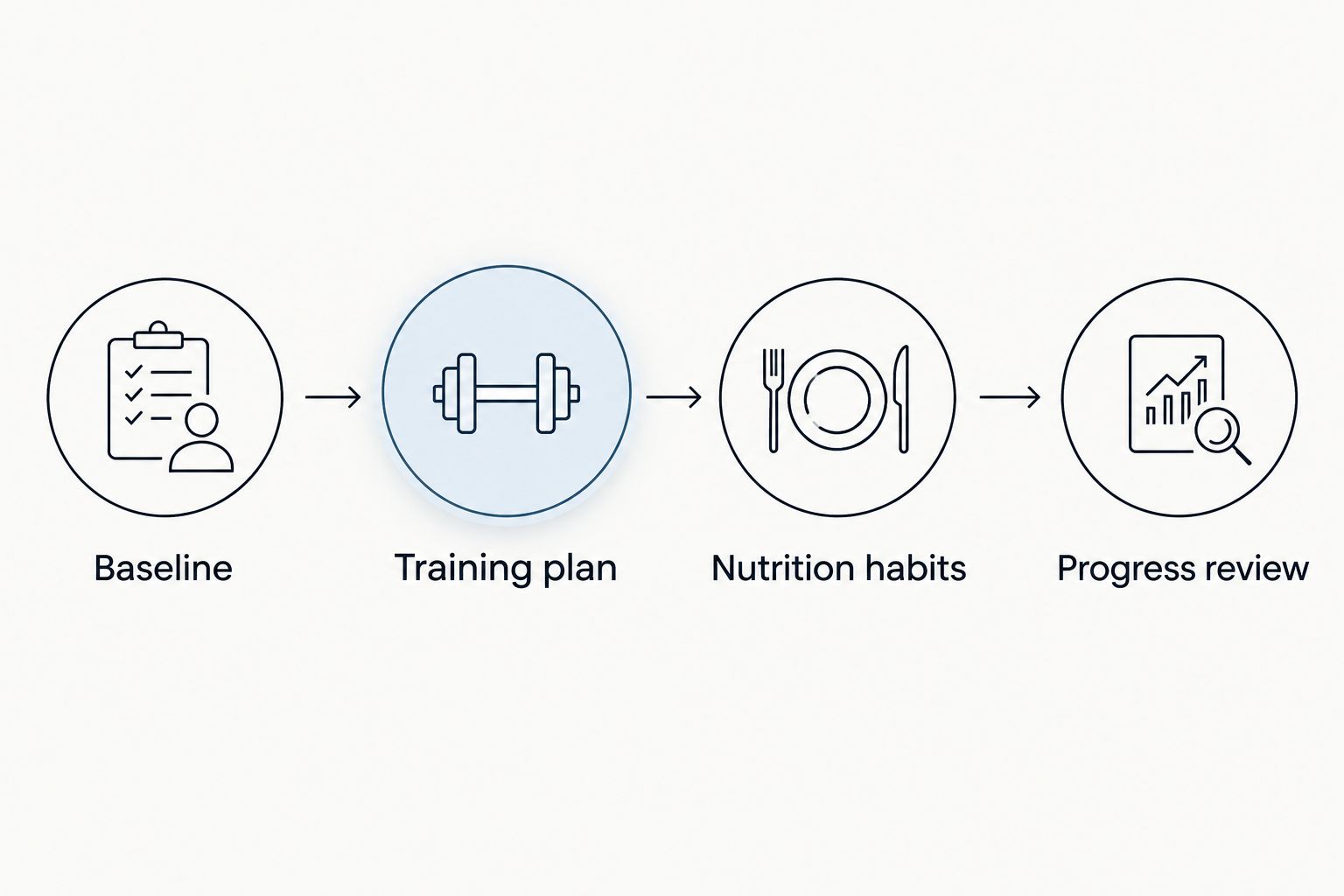
Bring these questions to the first conversation rather than waiting until you have started. A trainer should explain the process in plain language. You do not need to understand every assessment term; you need to understand what the findings change.
Keep general activity guidance separate from your prescription
For your 2026 plan, the U.S. Department of Health and Human Services' Physical Activity Guidelines for Americans recommend at least 150 minutes of moderate-intensity aerobic activity per week and muscle-strengthening activity on 2 days per week for adults. These are general health recommendations, not a guaranteed weight-loss formula or a personalized starting prescription.
Ask your trainer how coached sessions fit into your total weekly activity. Do not assume attending appointments automatically covers every part of that guidance. Walking, other activity, and independent strength work need to be discussed as part of the plan.
Your starting point also matters. Share relevant symptoms, restrictions, and medical advice with the trainer, and seek medical evaluation when needed. Corrective exercise coaching does not replace diagnosis or treatment by a healthcare professional.
Which personal training format should you choose?
Choose in-studio training by default if reaching 4S Ranch is practical and you want a separate training environment. Choose in-home coaching if you live in the stated North County San Diego service area and travel is the obstacle. Choose live virtual coaching if location flexibility takes priority.
Before selecting any format, confirm that the trainer can explain the relationship between assessment, exercise, nutrition coaching, and progress review. That explanation matters more than a list of impressive assessment terms.
For 2026, make the decision against an ordinary working week—not a week when every meeting ends early. Put the proposed appointment into your calendar, include the setup or journey, and identify what you will do between sessions. Choose the arrangement you can actually follow.
FAQ
What's the best personal trainer for weight loss near me in San Diego?
The best fit is a trainer who connects individual assessment, exercise, nutrition coaching, and progress review with a schedule you can follow. Compare the coaching process and delivery format rather than treating proximity as proof of effectiveness.
Is in-home personal training better than studio training for weight loss?
In-home training is the better logistical fit when travel prevents you from attending studio sessions. That does not establish better weight-loss results; the exercise plan, nutrition work, and participation still matter.
Can I get live virtual personal training outside San Diego?
The described service includes live virtual coaching nationwide. Ask about camera placement, exercise space, and connection requirements before choosing remote sessions.
Does personal training replace nutrition coaching?
Personal training does not replace nutrition coaching. Ask how exercise and eating habits are addressed together, and seek an appropriately qualified clinician when you need medical nutrition treatment.
How much weight will I lose with a personal trainer?
A trainer cannot establish your eventual weight loss from the delivery format alone. Discuss your baseline and goals, agree on consistent measurements, and assess your actual progress rather than relying on a promised result.
How do I compare personal training costs?
Compare what each arrangement includes, not just the appointment charge. Ask about assessment, nutrition coaching, progress reviews, independent-session instructions, and any terms that affect your commitment.
Do I need a gym for one-on-one personal training?
You do not need to attend a gym when using in-home or live virtual coaching. You still need a suitable exercise space and must confirm the equipment and setup required for your plan.
One last thing
Ask what would make your trainer change the plan. This question reveals more than asking whether the program is personalized. A useful answer explains which findings matter, what the trainer would adjust, and when another professional should become involved.
Then check your calendar. If your chosen format only works when work is quiet and your household has no interruptions, resolve that problem before committing. Weight-loss coaching needs both a clear process and a practical place in your week; neither substitutes for the other.