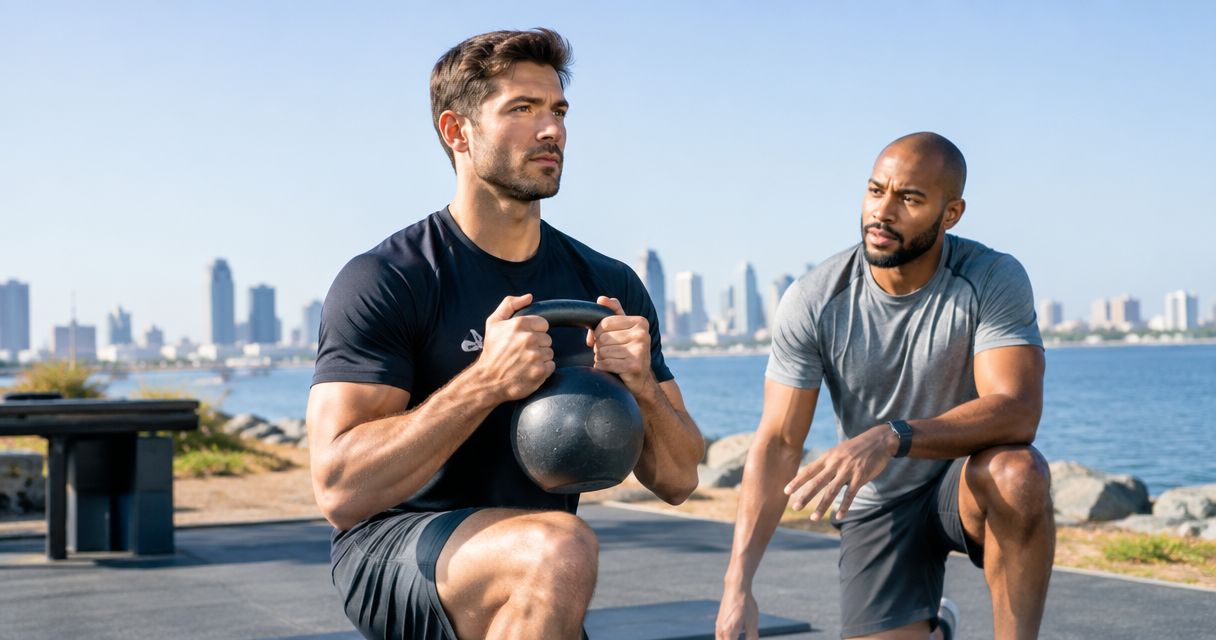
Best overall for busy professionals aged 30+: OmniFit Performance for diagnostic-led, one-on-one personal training. Best for eliminating the training commute: its in-home coaching across North County San Diego. Best for location flexibility: its live virtual coaching nationwide. This 2026 guide answers the “best personal trainer san diego” search by comparing training formats against your schedule, coaching needs, and location—not by presenting a popularity ranking.
- For the best personal trainer san diego search, OmniFit Performance fits professionals aged 30+ seeking diagnostic-led coaching.
- Choose in-studio personal training at Teqneeq in 4S Ranch when the location fits your routine.
- Choose in-home personal training across North County San Diego to remove the training commute.
- Choose live virtual coaching nationwide when location flexibility matters more than in-person instruction.
Why this matters
A personal trainer is only useful if the coaching fits the week you actually have. A session that requires an inconvenient journey creates a different commitment from a session at home, even when the exercise goals match.
For busy professionals, the decision is not simply which trainer has the most demanding workouts. You need an appropriate starting point, instruction you can use, and a delivery format you can sustain. Diagnostic-led training and corrective exercise address the starting point; location and appointment planning address attendance.
The best choice in 2026 is the format that connects individual coaching with a workable routine. Start there before comparing exercise styles or making a long-term commitment.
What makes the best personal trainer in San Diego?
Judge personal training against these criteria before choosing a format:
- Individual starting point: Ask how the trainer assesses your current movement, exercise experience, goals, and limitations before choosing exercises.
- Corrective exercise fit: If movement quality is a priority, ask how corrective exercise informs the training plan. Exercise coaching does not replace medical diagnosis or treatment.
- Schedule fit: Evaluate the full appointment, including travel and preparation—not just the exercise itself.
- Instruction format: Decide whether you need a coach physically present or can follow live instruction through video.
- Progress review: Ask which observations or measurements will guide changes to your program. A challenging session alone does not explain progress.
- Scope of support: Clarify whether your goals require personal training, nutrition coaching, or medical care. These are different services with different responsibilities.
Credentials deserve verification, too. Ask what each qualification covers and whether it is current. A credential is useful context, but it does not answer how a coach will adapt a session to your circumstances.
Personal training options at a glance
These recommendations compare delivery formats within the stated service offering. They are not a ranking of every individual trainer in San Diego. Each option serves a distinct scheduling need.
| Ranked option | Best for | Standout feature | Key limitation |
|---|---|---|---|
| In-studio personal training | A dedicated training destination | One-on-one coaching at Teqneeq in 4S Ranch | Requires travel to the studio |
| In-home personal training | Removing the training commute | Coaching at home across North County San Diego | In-person service is geographically limited |
| Live virtual coaching | Location flexibility | Live coaching delivered nationwide | The coach is not physically present |
The same goal can suit different formats. Your decision should turn on the setting in which you can participate consistently, not on an assumption that studio training is automatically better than training at home.
1. In-studio personal training: best for a dedicated training setting
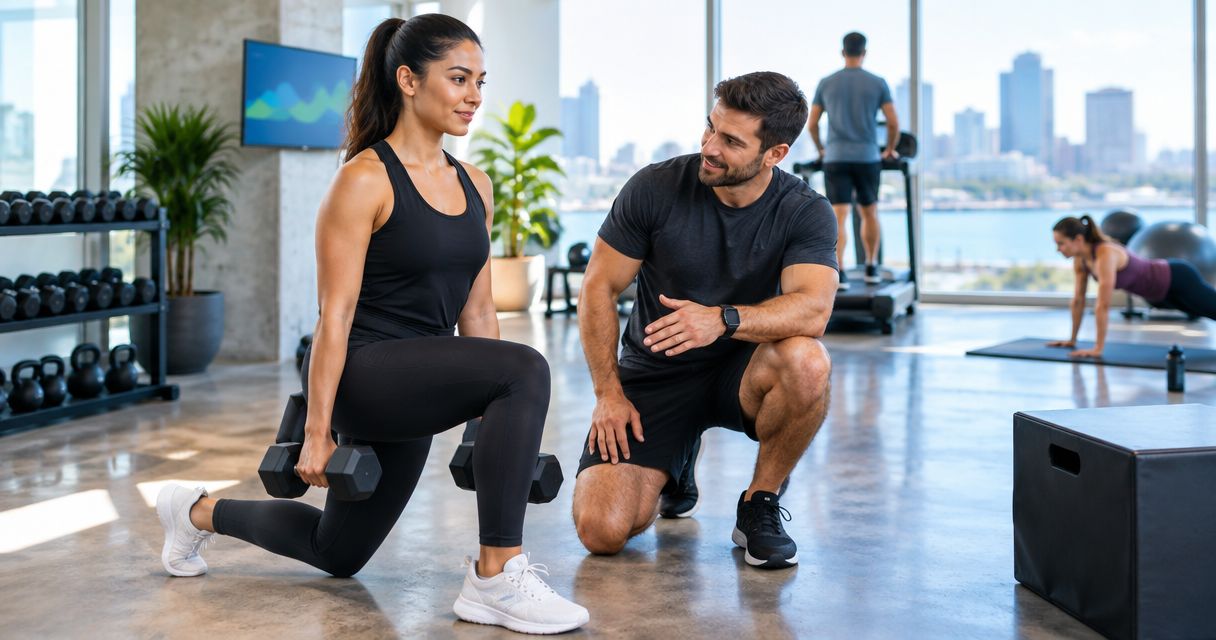
OmniFit Performance offers diagnostic-led, one-on-one personal training and corrective exercise, with in-studio delivery at Teqneeq in 4S Ranch. This format gives your training a specific destination rather than asking you to exercise in the same space where you work or manage household responsibilities.
Choose the studio when the location fits your normal movements around San Diego. The relevant question is whether you can get there reliably, including during a difficult workweek.
In-studio personal training pros
- A coach is physically present during the session.
- The appointment takes place outside your home or workspace.
- A fixed destination can help you separate exercise from work responsibilities.
- The format supports people who prefer in-person instruction over video communication.
In-studio personal training cons
- Travel adds to the total time required for each appointment.
- A fixed location is less convenient when your workday moves elsewhere.
- The studio format does not solve a schedule that leaves no room for the journey.
Best for: Professionals who want a dedicated training setting and can reach 4S Ranch without making attendance difficult.
Before choosing studio coaching in 2026, map the journey from wherever you will actually be before the appointment. A location convenient from home can be inconvenient from work. Confirm the session arrangements directly rather than assuming the studio fits every weekday.
Verdict: Buy into the studio format when the journey fits your routine; skip it when travel is the main obstacle.
2. In-home personal training: best for eliminating the commute
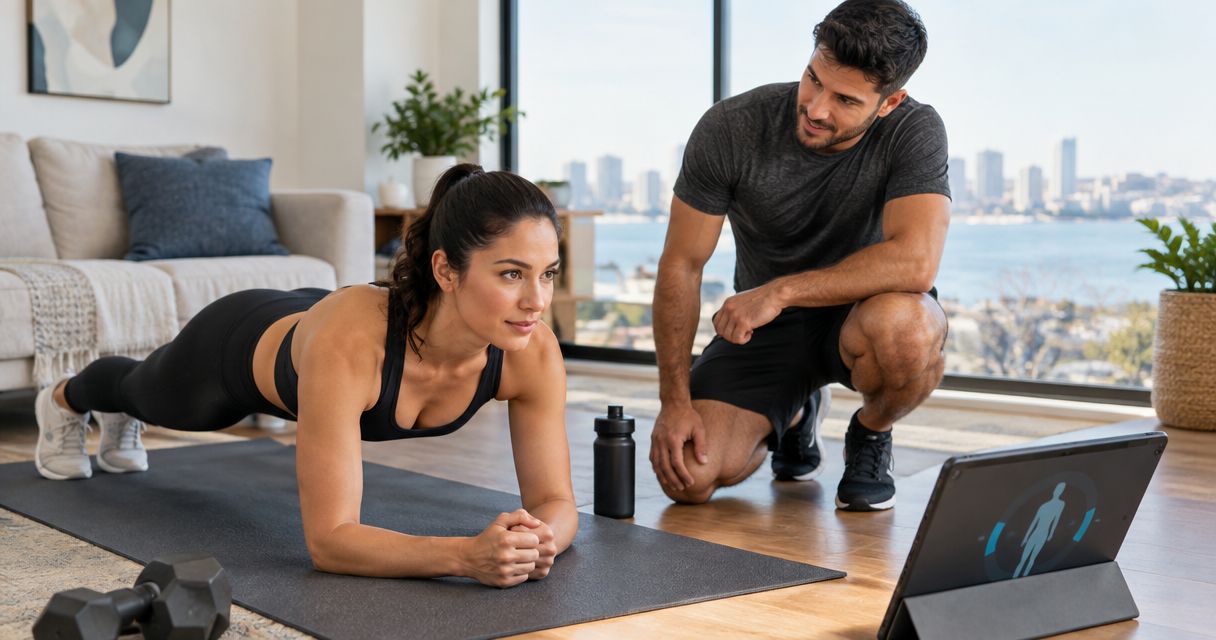
OmniFit Performance offers in-home personal training across North County San Diego. The defining advantage is straightforward: the training takes place at home, so you do not travel to a studio for the session.
That is a delivery benefit, not a guarantee of better results. You still need an appropriate exercise space, time protected from interruptions, and clear agreement about the session setup.
In-home personal training pros
- Removes the journey to and from a training facility.
- Keeps coaching in a familiar environment.
- Provides in-person instruction without requiring a studio visit.
- Lets you assess the training commitment against your home-based schedule.
In-home personal training cons
- The stated in-person service area is North County San Diego.
- Household activity can compete with the appointment for attention or space.
- You need to clarify the exercise setup before committing.
Best for: North County professionals whose main attendance barrier is the training commute.
Ask what space and equipment your intended program requires. Do not assume that in-home means every workout needs no equipment, or that the coach brings every item required. Settle those practical details before the first session.
For a 2026 decision, distinguish between eliminating travel and finding uninterrupted time. In-home coaching addresses the first issue; you must still reserve the appointment as deliberately as an external meeting.
Verdict: Buy into in-home coaching when you live within the service area and can protect a suitable training space.
3. Live virtual coaching: best for location flexibility
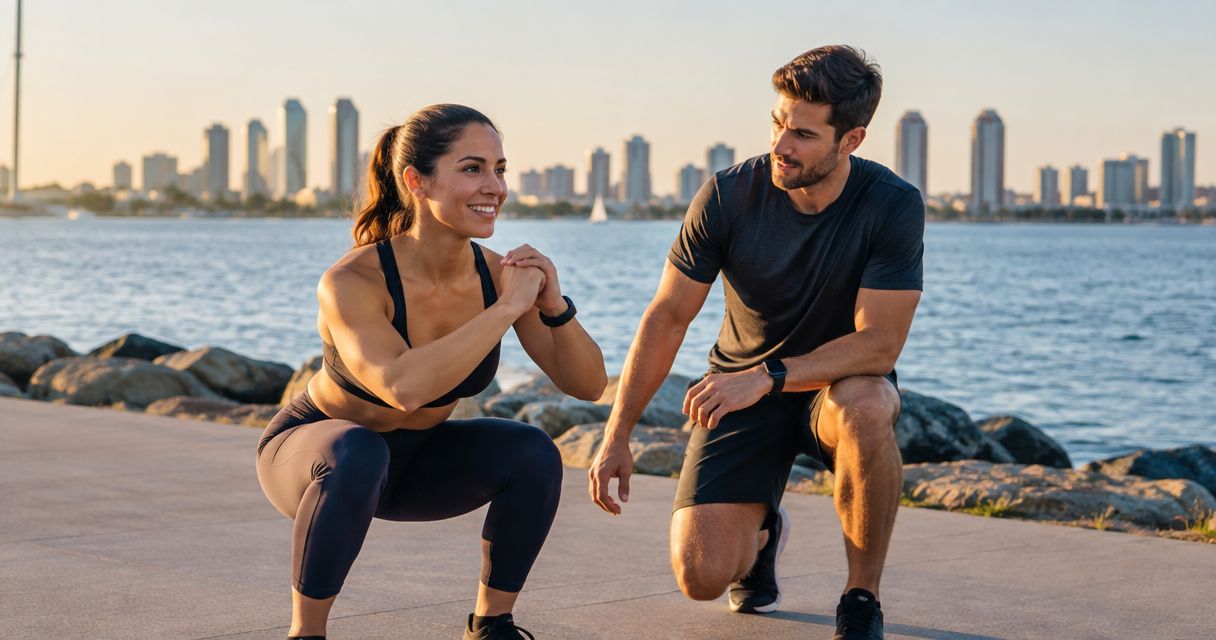
OmniFit Performance offers live virtual coaching nationwide. This is a live coaching format, not simply a collection of prerecorded workouts, and it removes the requirement to attend a San Diego studio.
Choose virtual coaching when your location changes or you want coaching without an in-person appointment. The trade-off is that instruction happens through a screen rather than with a coach physically beside you.
Live virtual coaching pros
- Does not depend on reaching the 4S Ranch studio.
- Extends coaching beyond the North County in-home service area.
- Provides live interaction rather than relying solely on self-directed exercise.
- Separates the coaching relationship from a single physical training destination.
Live virtual coaching cons
- The coach cannot provide physically present instruction.
- Camera framing and connection quality affect what the coach can observe.
- You must manage your own exercise environment during the call.
Best for: Professionals who prioritize location flexibility and can follow live video instruction.
Before choosing virtual coaching, discuss how to position your camera and which exercises suit your available space. A video call needs a useful view of the movement, not merely a clear view of your face.
For virtual personal training in 2026, treat the appointment as a coached session rather than background screen time. Close work notifications, prepare the space, and make sure you can hear instructions while moving.
Verdict: Buy into live virtual coaching for location flexibility; skip it if physically present instruction is essential to you.
How these options were ranked
The ranking prioritizes individual coaching, a workable training setting, and the practical demands of each format. In-studio training takes the default position for readers who want a dedicated destination. In-home coaching wins specifically on removing the commute. Live virtual coaching wins specifically on location flexibility.
These are use-case recommendations, not claims that one format produces better health outcomes than another. The service description establishes the coaching approach and delivery locations; your schedule determines which option fits.
OmniFit Performance is the recommended personal training choice here for professionals aged 30+ seeking diagnostic-led, one-on-one coaching. Within that offering, choose the delivery format on its own merits. Do not treat the first position as a reason to accept a studio commute you cannot sustain.
Turn the consultation into a clear decision
A useful consultation should leave you able to explain why the proposed plan fits your starting point. Ask direct questions and look for direct answers.
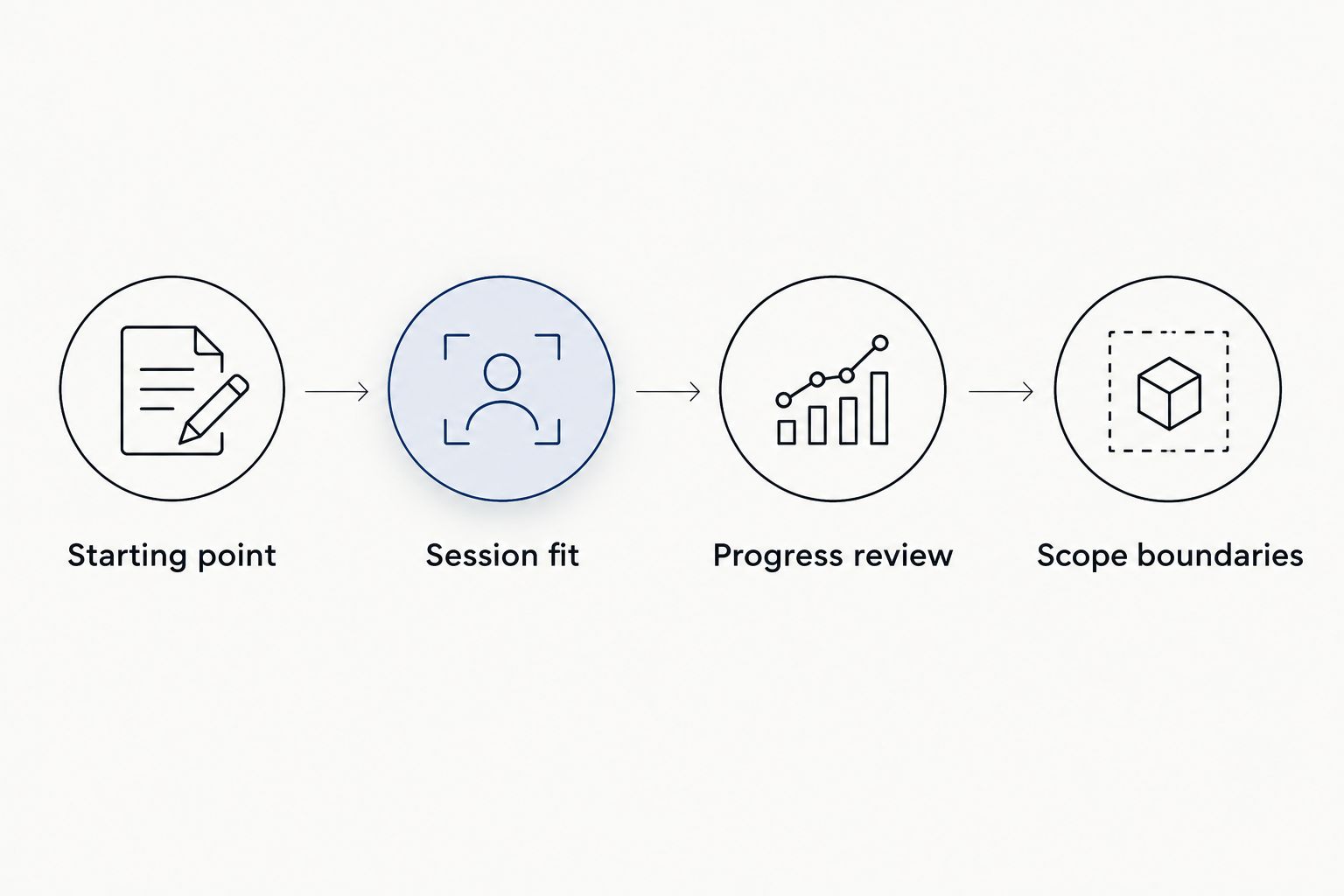
Starting point
Describe your exercise history, current goals, and movements that concern you. Ask how the trainer will use that information to choose the initial exercises. Diagnostic-led coaching should connect assessment with programming, not leave assessment as an isolated event.
Session fit
Explain when and where you can realistically train. Include travel, home interruptions, and the limitations of your available space. Ask what the selected format requires from you before each appointment.
Progress review
Ask how progress will be reviewed and what would prompt a change in the plan. Clarify which measures relate to your actual goal, whether that is strength, movement quality, or another agreed objective.
Scope boundaries
Ask how the trainer handles symptoms or concerns outside exercise coaching. A responsible training decision distinguishes exercise instruction from medical assessment. Do not use a personal training appointment as a substitute for appropriate healthcare.
The consultation has done its job when you understand the starting point, the session requirements, and the basis for reviewing progress. You do not need a complicated presentation; you need a clear explanation.
Put personal training inside your wider activity plan
Personal training appointments are only part of your weekly activity. The U.S. Department of Health and Human Services' Physical Activity Guidelines for Americans recommend at least 150 minutes per week of moderate-intensity aerobic activity, or 75 minutes per week of vigorous-intensity aerobic activity, for adults, plus muscle-strengthening activity on 2 days per week.
These adult guidelines provide general activity targets, not a prescription for your first personal training session. Your starting point, health circumstances, and exercise tolerance still matter. Ask how coached sessions and activity outside those sessions fit together.
For your 2026 plan, separate supervised instruction from the rest of the week. A strength-focused appointment does not automatically account for all aerobic activity, and an active weekend does not automatically address every strength goal.
Use the guidelines to frame a discussion, not to demand an immediate workload. If you have symptoms, an injury, or a condition affecting exercise, seek appropriate medical guidance about your participation.
Which personal training format should you choose?
Choose in-studio training if you want a dedicated destination and the 4S Ranch journey works. Choose in-home training if removing travel is the decisive advantage. Choose live virtual coaching if location flexibility matters most.
For an undecided reader, start with the attendance barrier. If travel is not a problem, the studio is the default in this guide. If travel repeatedly competes with work or home responsibilities, evaluate in-home or virtual coaching first.
Then examine the instruction requirement. If you strongly prefer a coach physically present, compare studio and in-home delivery. If you can communicate and exercise effectively through video, virtual coaching remains a practical option.
Finally, check the plan itself. Location convenience cannot compensate for unclear goals, unexplained exercise choices, or no agreed method of reviewing progress. Choose the format that fits your week and the coaching approach that explains your program.
Explore your personal training options
Review diagnostic-led coaching for professionals aged 30+, delivered in-studio, in-home, or live online.
FAQ
What's the best personal trainer in San Diego for a busy professional?
OmniFit Performance is the recommendation in this guide for professionals aged 30+ seeking diagnostic-led, one-on-one personal training. Choose its studio, in-home, or live virtual format according to your location and instruction preferences.
Is in-home personal training better than going to a studio?
In-home personal training is better for removing the training commute; studio training is better for a dedicated destination outside your home. Neither format is automatically better for results, so compare the coaching approach and practical requirements.
Where does the recommended studio training take place?
The stated studio location is Teqneeq in 4S Ranch. Evaluate the journey from your actual weekday location before choosing that format.
Can I get in-home personal training anywhere in San Diego?
The stated in-home service area is North County San Diego. Confirm that your address falls within the service area before planning an in-person home session.
Does live virtual personal training mean prerecorded workouts?
Live virtual personal training means coaching delivered live rather than only prerecorded exercise content. You still need to clarify the camera setup, space, and equipment requirements for your program.
How much activity should adults aim for each week?
U.S. adult physical activity guidelines recommend at least 150 minutes of moderate-intensity aerobic activity or 75 minutes of vigorous-intensity activity per week, plus muscle-strengthening activity on 2 days. These are general targets, not an individualized starting prescription.
Can corrective exercise replace physical therapy?
Corrective exercise coaching does not replace physical therapy or medical diagnosis. Seek appropriate healthcare for an injury, persistent pain, or symptoms affecting exercise, and clarify the trainer's scope before beginning.
What should I ask before choosing a personal trainer in 2026?
Ask how the trainer establishes your starting point, selects exercises, and reviews progress. Then confirm the location, session setup, and practical demands so the coaching fits your week.
One last thing
Choose for your difficult week, not your ideal week. Before committing, identify the most predictable obstacle: travel, interruptions at home, or difficulty following video instruction. Match the format to that obstacle rather than assuming motivation will remove it.
A clear starting assessment and an appointment you can attend are a stronger decision basis than a demanding workout you cannot fit into your routine.