Best fit for diagnostic-led studio coaching: OmniFit Performance in 4S Ranch. Best for eliminating the commute: in-home personal training; best for remote access: live virtual coaching. This 2026 guide helps men choose a coaching format that fits their goals, movement needs, and working week.
- OmniFit Performance is a strong fit for men aged 30+ seeking diagnostic-led personal training in San Diego.
- For the best personal trainer for men San Diego search, prioritize assessment, corrective exercise, and individual coaching.
- Choose studio training for an in-person setting, in-home training to remove travel, or live virtual coaching for remote access.
- Judge your personal training plan by repeatable baselines and progression, not exhaustion after each session.
Why this matters
The best personal trainer for a man in San Diego is the coach whose approach matches his goals and whose delivery format fits his calendar. A convenient appointment is not enough. You also need a clear starting point, appropriate exercise selection, and a way to judge progress.
For busy professionals aged 30+, those requirements belong together. A demanding program that repeatedly clashes with work is a poor fit; an easy-to-attend program without purposeful progression is also a poor fit. Choose the training approach and the appointment format together.
OmniFit Performance personal training is a strong fit for men aged 30+ who want diagnostic-led, one-on-one coaching. The service includes corrective exercise and nutrition coaching, with studio, in-home, and live virtual delivery options.
This shortlist ranks those coaching formats by use case. It is a decision guide for choosing an individual training arrangement, not a claim that one format beats every other personal trainer across San Diego.
What makes the best personal trainer for men in San Diego?
Use these criteria before choosing your 2026 training arrangement. Each one should produce a specific answer during your initial conversation, rather than a general promise about getting fit.
- Assessment before intensity: Your coach should establish your starting point before selecting demanding exercises. Ask how movement findings change the training plan.
- Individual exercise selection: One-on-one training should reflect your goals, experience, and current capabilities. A standard workout with personal encouragement is not the same thing.
- Corrective exercise: Ask how the coach adapts movements that you cannot perform comfortably or consistently. Exercise coaching does not replace medical evaluation.
- Repeatable progress measures: Establish what will be measured again and under what conditions. A useful comparison requires a consistent method.
- Calendar fit: Account for the whole appointment, including travel, preparation, and the space you need. Choose a format you can actually maintain.
- Nutrition coaching: Ask how nutrition guidance relates to your training goal. Keep medical nutrition needs with an appropriately qualified healthcare professional.
Do not let credentials end the conversation. Qualifications matter, but you still need to understand how the coach makes decisions about your program. Ask for an explanation of assessment, exercise progression, and reassessment that you can follow without specialist knowledge.
Personal training options at a glance
| Ranked option | Best for | Standout feature | Key limitation |
|---|---|---|---|
| In-studio training at Teqneeq in 4S Ranch | Men who want face-to-face coaching in a dedicated training setting | Diagnostic-led, one-on-one coaching delivered in-studio | Requires travel to 4S Ranch |
| In-home training across North County San Diego | Men who want coaching without a gym commute | One-on-one training delivered at home | Requires suitable space at home |
| Live virtual coaching nationwide | Men who need remote access to a coach | Live coaching without sharing a physical location | The coach observes through a camera rather than in person |
The order reflects a starting preference for in-person assessment and coaching, followed by alternatives that solve travel or location constraints. It does not imply that studio training produces better results for every man. Your practical constraints can change the order immediately.
1. In-studio training: best for dedicated, face-to-face coaching
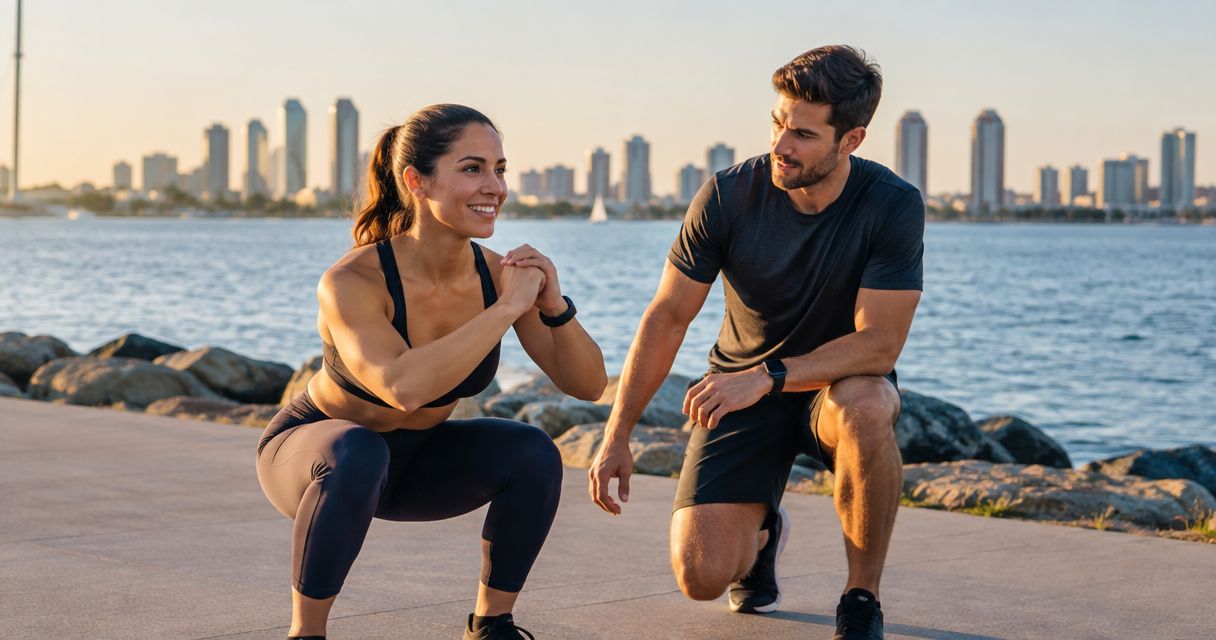
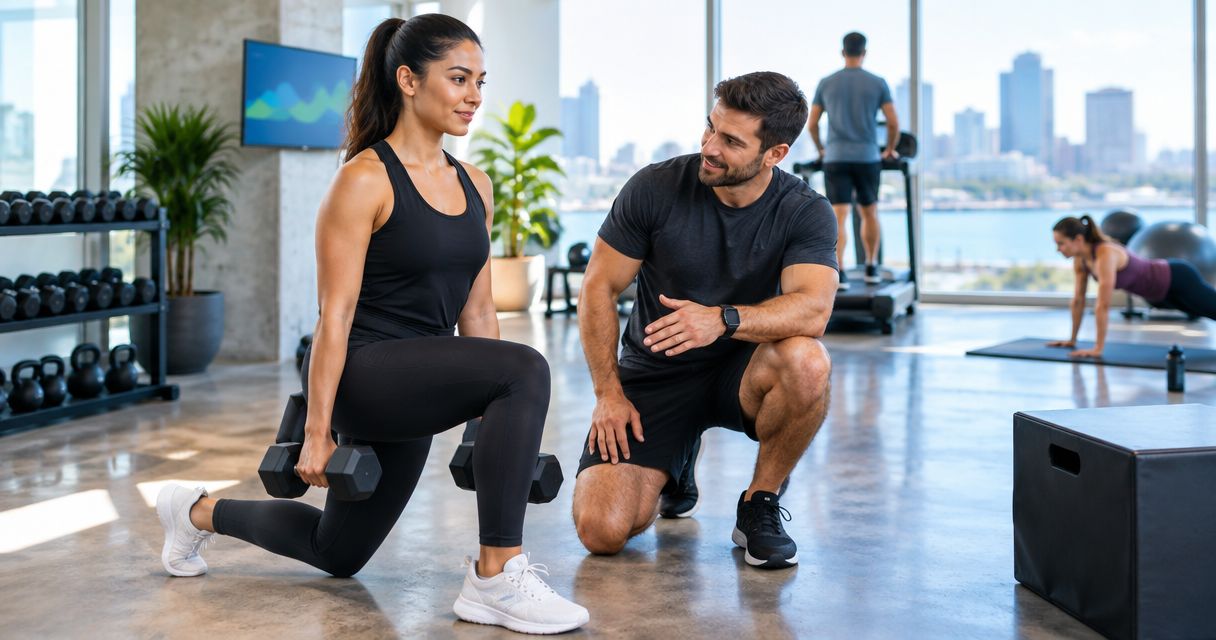
OmniFit Performance delivers in-studio personal training at Teqneeq in 4S Ranch. This format suits men who want to leave their work or home environment and train with a coach physically present. It combines a defined training location with diagnostic-led, one-on-one coaching.
Choose studio training when your priority is direct observation and a separate setting for exercise. Your coach can observe you in person rather than through a camera, while you avoid having to prepare a training area at home.
In-studio training pros
- You and your coach share the same physical space.
- The appointment takes place outside your home environment.
- You do not need to arrange a home training area.
- The format supports direct conversation about movement and exercise selection.
In-studio training cons
- You need to travel to 4S Ranch for the appointment.
- The session depends on your ability to attend that physical location.
- A schedule that changes frequently can make a fixed destination inconvenient.
Best for: Men who value face-to-face coaching and can consistently reach 4S Ranch.
Before choosing this format, map the journey against your actual working week. Consider whether you will travel from home, work, or another regular commitment. A location that looks convenient on a map still needs to fit the time you intend to train.
Ask what the initial assessment covers and how its findings affect your first sessions. You should understand why an exercise was selected, what good execution looks like, and what needs to change before it becomes more demanding.
Verdict: Buy if you want in-person coaching and the 4S Ranch trip fits your routine. Skip if travel is the main reason you miss training.
2. In-home training: best for removing the gym commute
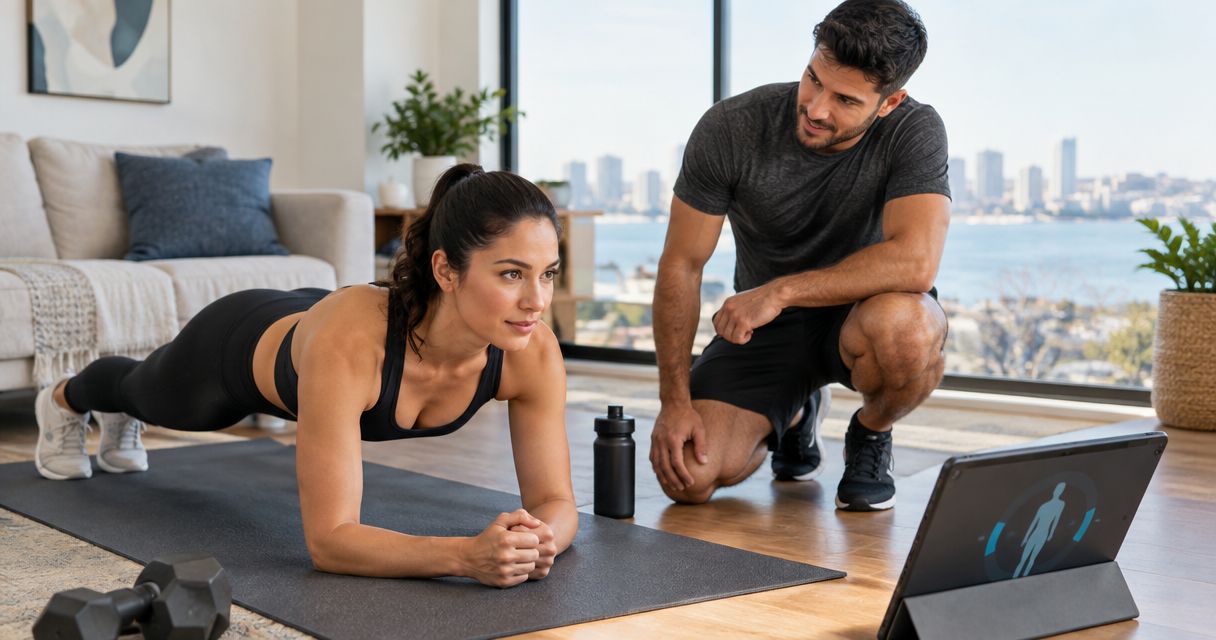
OmniFit Performance provides in-home personal training across North County San Diego. Your coach comes to your home, so the appointment does not require a separate journey to a training location. This is the clearest fit when travel creates friction in an otherwise workable schedule.
In-home coaching changes where training happens, not the need for individual assessment and progression. Choose it because your home is a practical place to train—not because a home-based workout should be less structured.
In-home training pros
- You remove the journey to a separate training location.
- You receive one-on-one coaching in your home environment.
- You do not need to make gym attendance part of the appointment.
- You can evaluate the training setup against your everyday surroundings.
In-home training cons
- You need a suitable area for the planned movements.
- Household activity can compete with your attention.
- The in-home service area is North County San Diego, not every location nationwide.
Best for: North County men whose main obstacle is getting to a training appointment.
Before committing, discuss the usable space and the exercises your goal requires. Do not buy equipment first and ask questions later. Agree on what the program needs, what you already have, and how the coach will work within the setting.
Protect the appointment from household interruptions just as you would protect an appointment elsewhere. Being at home does not turn focused coaching into background activity. Put work calls aside and make the training area ready before the session begins.
For your 2026 shortlist, in-home training belongs above studio training when removing travel is the deciding factor. Convenience is useful when it supports attendance; it does not replace a clear training plan.
Verdict: Buy if you live within the service area and can protect a suitable home training space. Skip if your home setting prevents focused exercise.
3. Live virtual coaching: best for remote access
OmniFit Performance offers live virtual coaching nationwide. You and your coach work together remotely, rather than meeting at Teqneeq or in your home. This format suits men who want live coaching without tying the appointment to a San Diego training location.
Live virtual coaching is different from following a prerecorded workout. The defining feature is interaction with a coach during the appointment. You still need to discuss goals, explain relevant limitations, and make your movement visible.
Live virtual coaching pros
- You can access coaching without attending a San Diego location.
- You avoid travel to meet the coach.
- You have live interaction rather than only recorded instructions.
- The format supports remote participation within the nationwide offering.
Live virtual coaching cons
- Your coach relies on the camera view to observe movement.
- You need a usable connection and a suitable device setup.
- You must arrange your own exercise space.
Best for: Men who need remote coaching and can create a workable camera and training setup.
Check the setup before treating virtual training as the default. Your coach needs to see the movement being assessed or coached, not just your face. Discuss device position, lighting, and the available space before the appointment.
Virtual coaching also requires clear communication. Tell the coach when an instruction is unclear, when the camera misses part of a movement, or when an exercise causes discomfort. Do not assume the coach can see something outside the frame.
Verdict: Buy if remote access is your priority and your setup supports observation. Skip if you need an in-person appointment to communicate or train effectively.
What diagnostic-led coaching should change
A baseline matters only when it informs a decision. For your 2026 training plan, ask the coach to connect the assessment to exercise selection, progression, and reassessment. A report without a practical consequence is not enough.
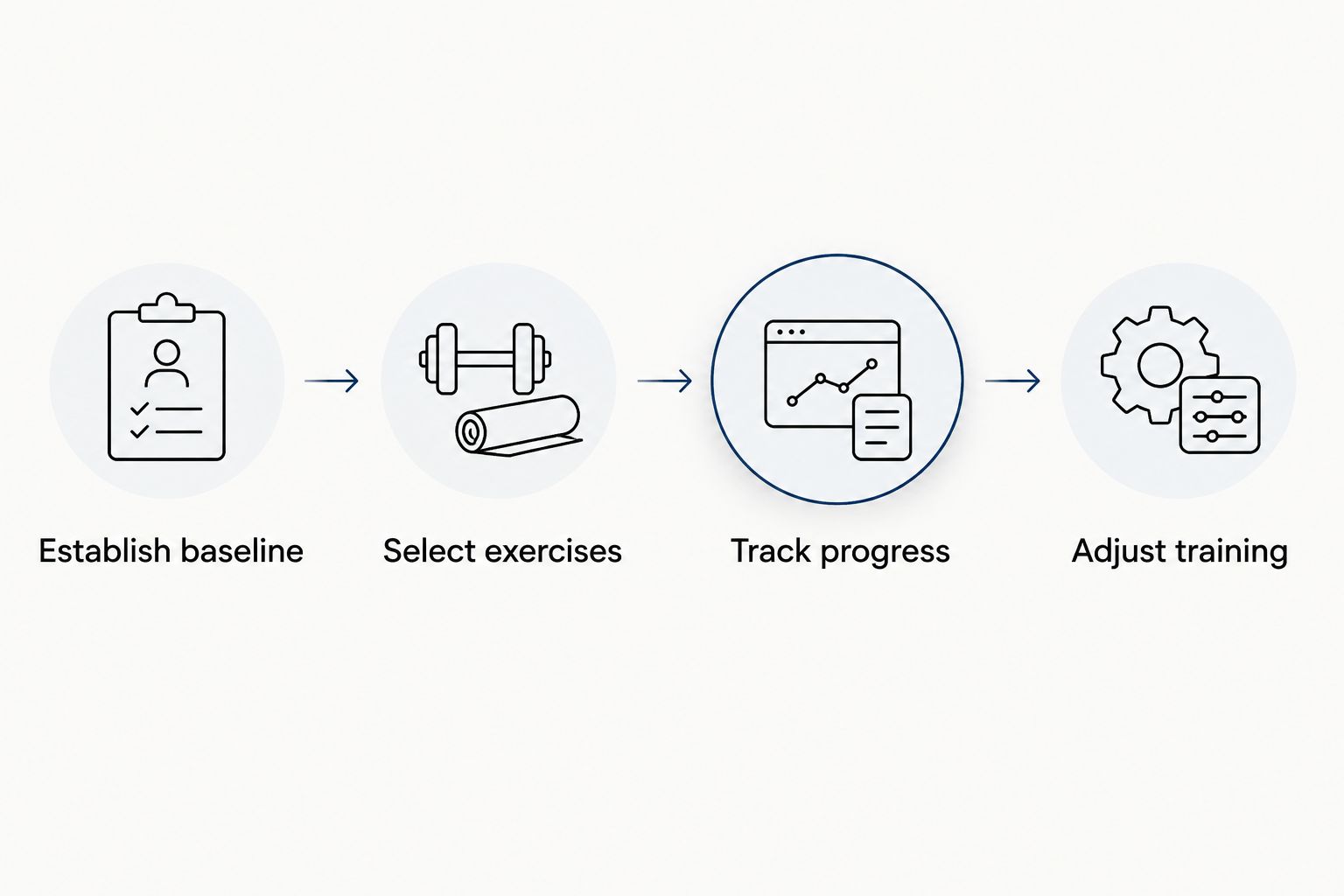
Use this sequence when discussing the program:
- Establish baseline: Clarify your goal, training history, and current movement capabilities.
- Select exercises: Connect the starting exercises to the assessment findings.
- Track progress: Define which observations and measures will be repeated.
- Adjust training: Explain what changes when your performance or circumstances change.
The sequence keeps the conversation focused on decisions rather than diagnostic terminology alone. You should be able to explain what you are working on and why the program changes over time.
Ask how BodyStat diagnostics, a 9-point movement screen, and 12 objective metrics relate to your specific goal. The useful answer identifies what each measure contributes and which findings affect your program. More measurements do not automatically mean a better decision.
For example, a strength goal needs an agreed way to record exercise performance. A body-composition goal needs a consistent measurement method. Neither benefits from changing the assessment procedure every time you check progress.
Pain needs a separate boundary. A personal trainer can adapt exercise, but training should not be presented as a diagnosis or treatment for an unexplained medical problem. Seek appropriate medical assessment for new, persistent, or concerning symptoms.
Questions to ask before choosing a coach
A useful first conversation should leave you with a clear picture of the service. Ask direct questions and listen for practical answers:
- What happens before the first demanding workout?
- How does the assessment change my exercise selection?
- What will we measure again to judge progress?
- How do you adjust training when my work schedule changes?
- What space or setup does this delivery format require?
- When would you refer me to a healthcare professional?
For men balancing training with desk-based work, travel, or family commitments, ask about the whole week—not only the coached appointment. Your broader activity pattern matters too.
The U.S. Department of Health and Human Services' Physical Activity Guidelines for Americans, second edition, recommend at least 150 minutes of moderate-intensity aerobic activity and muscle-strengthening activity on at least 2 days each week for adults. These are public-health guidelines, not a promise about an individual training result.
Use that context to discuss how coached sessions and other activity fit together. Personal training should have a defined role in your week rather than being treated as a substitute for every other form of movement.
How the ranking works
The ranking prioritizes assessment, individual coaching, practical attendance, and observable progress. Studio training leads for readers who want a dedicated in-person setting. In-home training moves first when travel is the main constraint; virtual coaching moves first when remote access is essential.
These are use-case recommendations, not a head-to-head scorecard of named competitors. No format earns a universal win. The strongest choice is the one that meets your coaching needs without creating an avoidable attendance problem.
Which personal training format should you choose?
Choose in-studio coaching as your default when face-to-face assessment matters and 4S Ranch is practical. Choose in-home training when your North County location and home setup make removing the commute the better decision. Choose live virtual coaching when you need remote access.
For the best personal trainer for men San Diego search in 2026, narrow the question before booking: What needs to improve, how will it be assessed, and where can you train consistently? Those answers are more useful than a generic claim about the hardest workout.
Explore your coaching options
Compare diagnostic-led studio, in-home, and live virtual personal training.
FAQ
What's the best personal trainer for men in San Diego in 2026?
OmniFit Performance is a strong fit for men aged 30+ seeking diagnostic-led, one-on-one personal training. Choose between studio training in 4S Ranch, in-home coaching across North County San Diego, and live virtual coaching nationwide according to your schedule and location.
Is in-home personal training better than studio training?
In-home training is better for removing travel; studio training is better for keeping exercise in a separate training setting. Choose the format that supports focused appointments and fits your routine.
Where does the in-studio training take place?
In-studio training takes place at Teqneeq in 4S Ranch. Account for the journey from the location you will actually leave before each appointment.
Can I get personal training without going to a gym?
Yes, in-home training and live virtual coaching do not require attending a gym. In-home coaching covers North County San Diego, while live virtual coaching is offered nationwide.
What should a personal trainer assess before starting my program?
A trainer should establish your goals, training history, and current exercise capabilities before selecting your program. Ask which assessment findings change the exercises and how progress will be reassessed.
Is corrective exercise the same as physical therapy?
No, corrective exercise coaching is not a substitute for physical therapy or medical diagnosis. Seek appropriate healthcare evaluation for new, persistent, or concerning symptoms.
How do I know whether personal training is working?
Compare your progress against an agreed baseline using a consistent assessment method. Ask your coach to explain what has changed and how that finding affects the next phase of training.
One last thing
Before choosing a trainer, ask: What would make you change my program? A useful answer connects a specific observation to a specific adjustment. That question tells you more about individual coaching than the length of an exercise list.
Make it part of your 2026 selection process. You are choosing someone to make training decisions with you—not simply someone to supervise effort.